The Church of Two Worlds
& The Reverend Hugh Gordon Burroughs
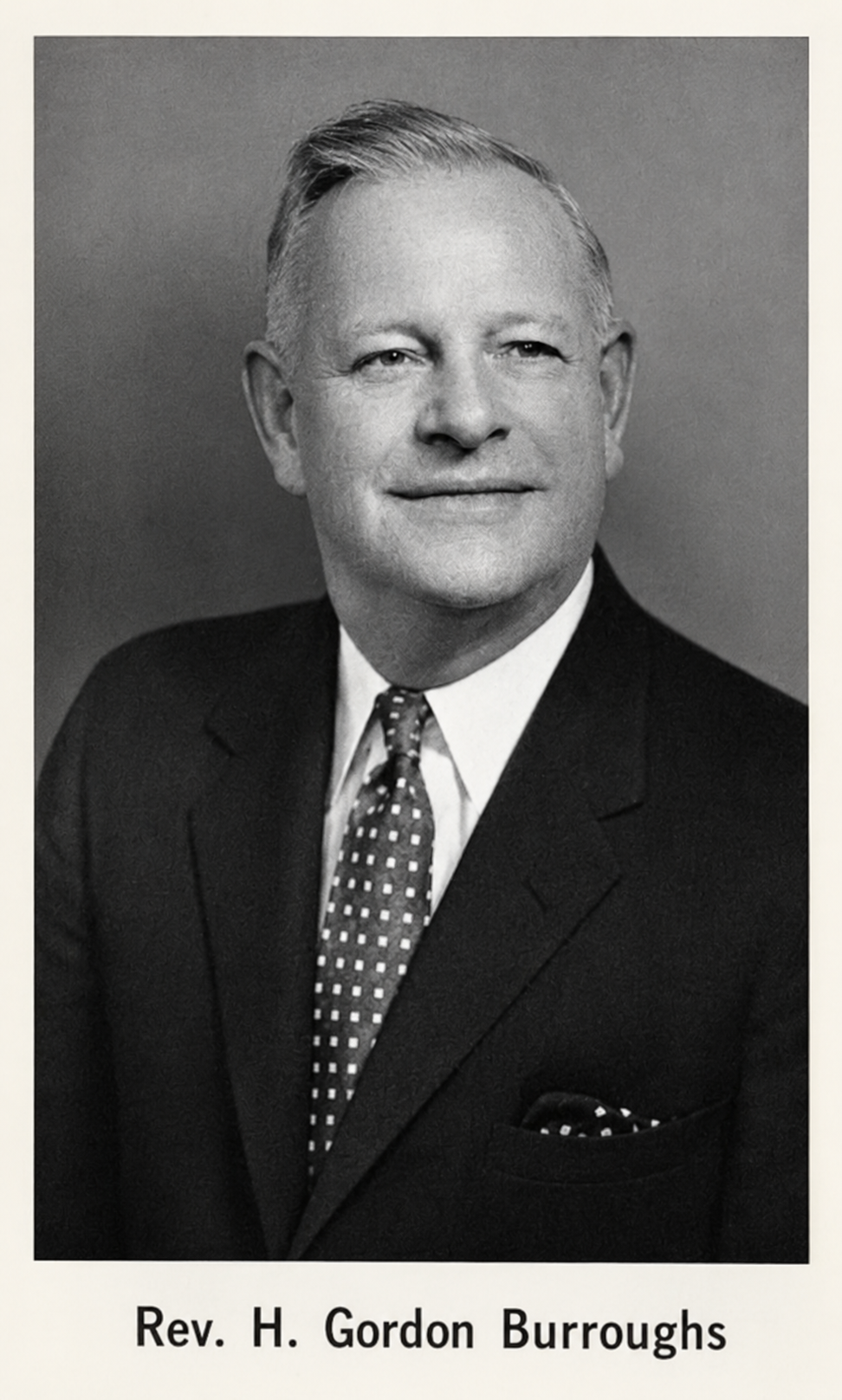
Hugh Gordon Burroughs founded the Church of Two Worlds in Washington, D.C. in 1936 under charter of the N.S.A.C. He was assisted by Miss Freda Egbert, and her mother and father, Erica and William Egbert.
Gordon Burroughs was born on a farm in Indiana. Having lost his parents at an early age, he was cared for by relatives, with the support of friends. Encouragement and support of some particularly understanding friends aided the development of his mediumship until it could become his full time activity. Spiritual and psychic phenomena were not too welcome at this time, and there were nights when, having been arrested for fraud, a jail cell became his shelter.
However, Gordon Burroughs persevered and visited many small, and sometimes larger mid-western towns—Texas to Minnesota, and southwest to the Rockies. This work laid the foundation for his becoming a minister of two mid-west Spiritualist churches, one in Cleveland, Ohio and the other in Chicago, Illinois.
Then the Great Depression of the 1930’s came and Mr. Burroughs, due to the economic conditions, left the Chicago church. It was necessary for him to accept any kind of work obtainable. Through those years the life of a Spiritualist minister was especially difficult.
On two different occasions his mediumship suddenly, without known cause, left him. During one of these intervals he worked in the iron mines in Missouri, and the other he served as chef and pastry maker on a Great Lakes boat on Lake Michigan. Each time his mediumship returned much stronger.
Among many interesting incidents that took place over the years is one concerning an out-of-body and astral travel experience. It was necessary for Mr. Burroughs to be out of town on an evening the development class was scheduled to meet. So it was agreed and prearranged that he would try to reach the class which would assemble on the regular schedule. At 9:30 P.M. pressing middle C on the piano was the signal he was there.
About ten minutes passed, when someone excitedly exclaimed, “Oh look, there he is. Middle C is down,” but there was no sound. Later Mr. Burroughs told the group that he had shut himself in a small closet in the hotel room, where he was the evening of the class. Supposedly he went into the closet to concentrate the vibratory energy, and tried to project himself to the class room. When he finally got there, and to the piano, he couldn’t get the key to go down. His finger went right through the piano key. But he had kept working during the time that “nothing happened,” and finally succeeded in depressing the key, but couldn’t get enough force to make the sound.
Another time at a later date he was supporting some research for the validity of psychic phenomena, conducted by researchers in Canada. They challenged his ability to go out of the body and applied the end of a lighted cigarette to the inside of each wrist. Later he commented that he did not feel any sensation of burning while the experiment was taking place, but when he came back into his body the deep burn hurt considerably. The scars from the experiment remained throughout the rest of his material life.
People familiar with his lecture and class work developed strong affection for some of his spirit guides and helpers almost as strong as they already had for Mr. Burroughs. Jolly Father Murphy, a Catholic priest was his master control. Reportedly, Father Murphy was lost in the great Chicago fire in October 1871. A strong helper of philosophy was Dr. Westlof, who had been a brain surgeon in Boston, Massachusetts. Those attending lectures could easily discern when Dr. Westlof made contact. The voice changed ever so slightly, and a torrent of rapidly inspired words spoken with great speed usually followed.
The story is told that on a visit to Camp Silver Belle, Ephrata, PA., Ethel Post-Parrish, an especially gifted materialization medium there, asked one day during an afternoon break, “Gordon, when are you going down to Washington, D.C. and start that church?”
After relocating in Washington, D.C., the Rev. Burroughs held his first service in the Continental Hotel on the Capitol Plaza, near the Union Station. During the next twenty-four years the Church of Two Worlds met in ballrooms and meeting rooms in various hotels and other locations in the city.
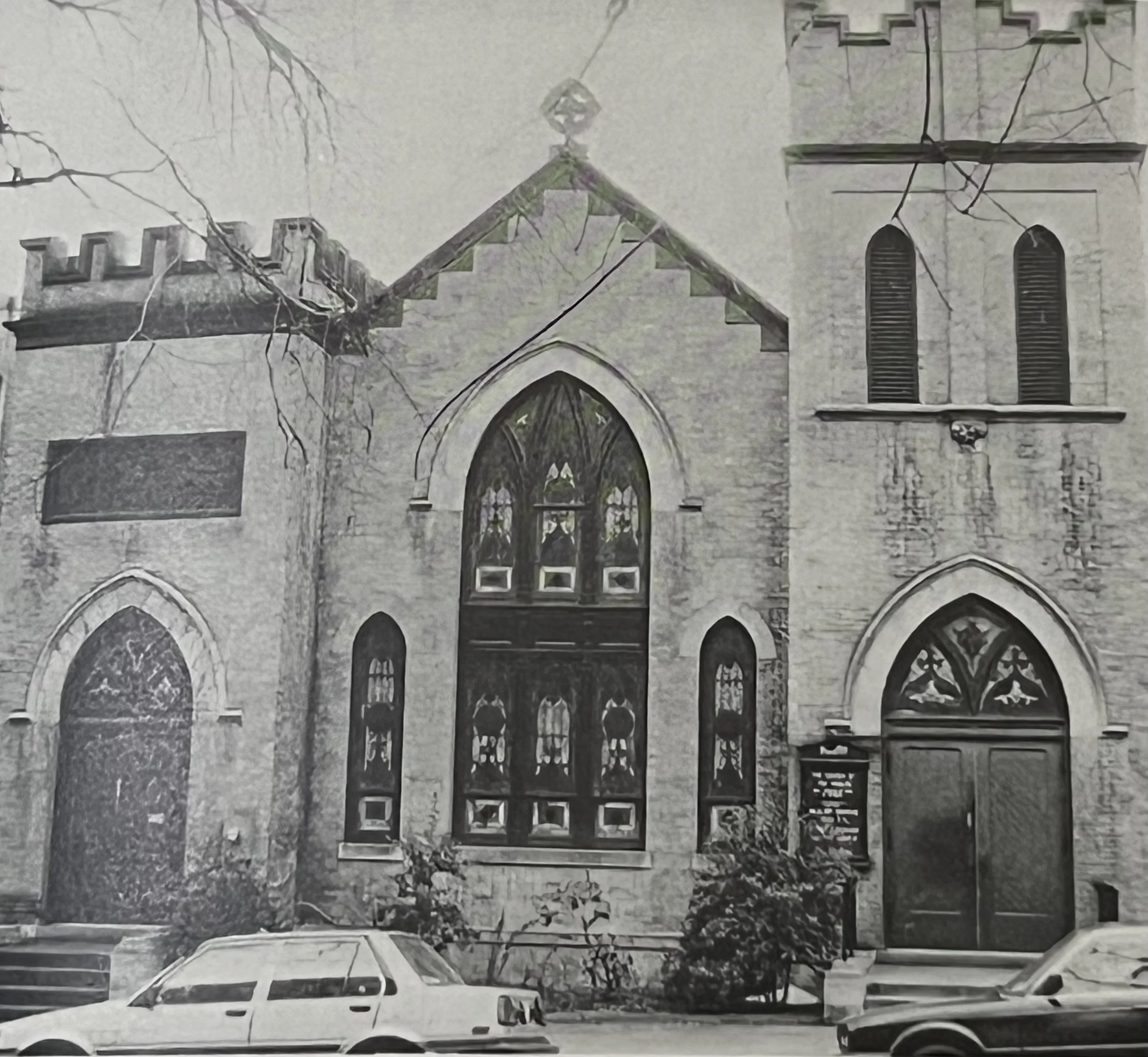
Then on a snowy, cold Sunday, February 14, 1960, the first service was held at 3038 Q Street, N.W. (Georgetown) in the newly purchased church building, the first permanent home, and the present one for the Church of Two Worlds.
Here the Rev. Burroughs served as minister, taking part in public activities, writing and teaching. In addition to articles, he wrote two books, Meditations, Reflections and Spiritual Philosophy and Becoming a Spiritualist. The latter book offers special guidance to any student of Spiritualist philosophy.
The Rev. Burroughs served as Vice President of the N.S.A.C. for many years, holding this office at the time he passed into the Spirit World, August 1971, in his 90th year.
Since that time the Church of Two Worlds has been continued and carried on by members, Licentiate Ministers, Mediums and Healers, attempting to give the Nation’s capital the beacon of spiritual philosophy which he set in motion.
By Virginia E. Bates
From the NSAC Centennial Book 1993
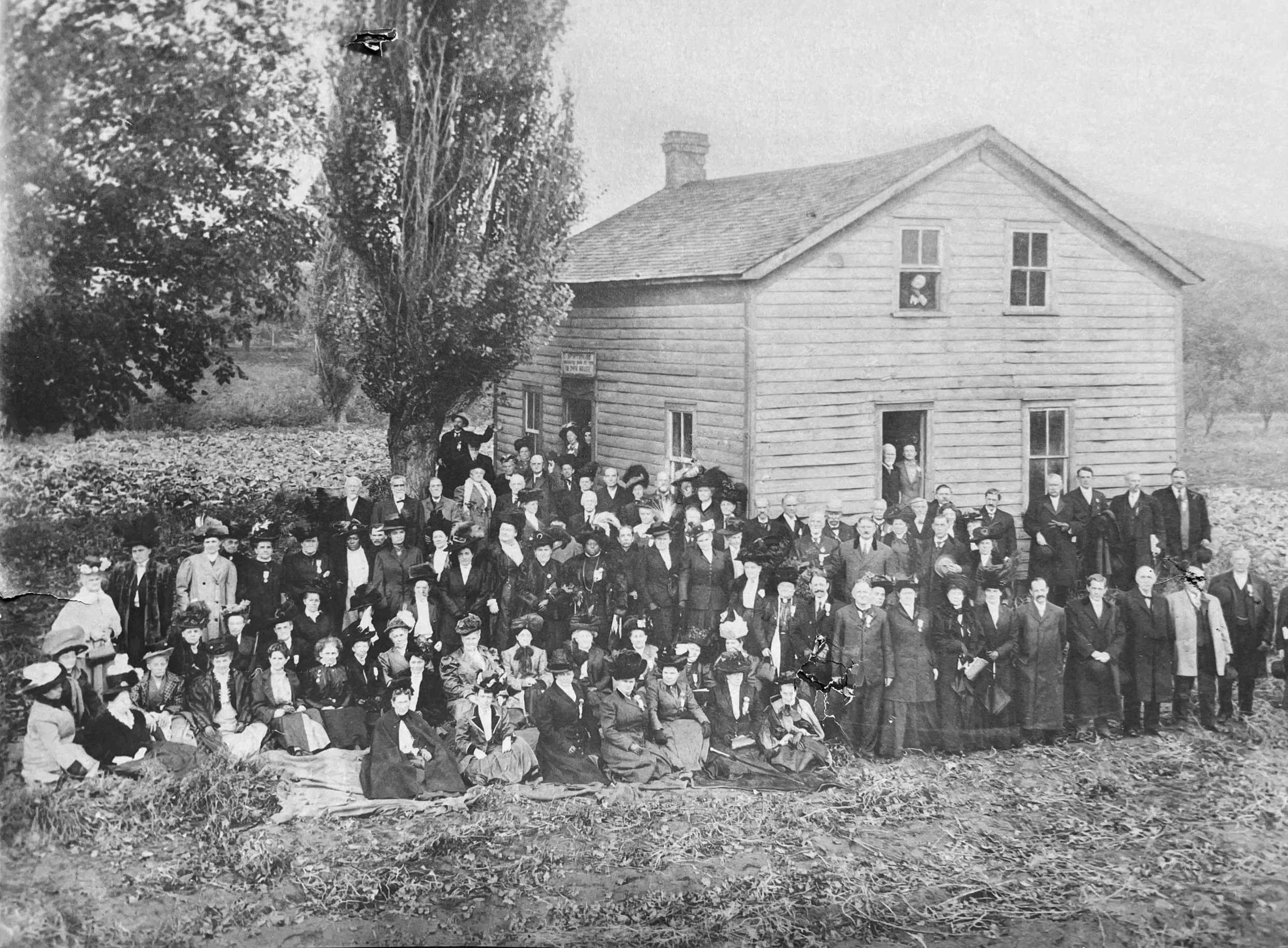
A Brief History of Spiritualism in America
Throughout the 1850s and 1860s, Spiritualism gained significant momentum. Public lectures, séances, and demonstrations of mediumship were held in cities and rural communities alike. The movement appealed to many Americans because it combined religious sentiment with the promise of observable phenomena. Spiritualists emphasized personal experience and evidence of survival rather than adherence to rigid theological doctrine. The trauma of the Civil War further accelerated interest in Spiritualism, as thousands of grieving families sought reassurance that their loved ones continued to exist beyond death.
During this early period the movement was decentralized. Independent circles, societies, and lecturers spread Spiritualist ideas across the country. While this grassroots growth fostered innovation, it also created challenges, including inconsistent teachings and occasional accusations of fraud. By the late nineteenth century many Spiritualists recognized the need for a national organization that could promote ethical standards, encourage education, and provide a unified voice for the movement.
In 1893 these efforts led to the formation of the National Spiritualist Association of the United States of America- what is now known as the National Spiritualist Association of Churches (NSAC) in Chicago, Illinois. The organization was created to bring together Spiritualist churches and societies under a shared framework of principles and governance. The NSAC articulated what became known as the Nine Principles of Spiritualism, which summarize the core beliefs of the religion. Among these are belief in the intelligence and power of God, the continuity of life after death, personal responsibility for one’s actions, and the possibility of communication with the spirit world through mediumship.
From its founding, the national association sought to establish Spiritualism not merely as a collection of phenomena but as a recognized religion with a philosophy and ethical foundation. The association developed systems for ministerial training, mediumship certification, and healing and missionaries. It also worked to protect Spiritualists from legal challenges that sometimes arose when mediumship was misunderstood or misrepresented. Through conventions, educational programs, and publications, the national association helped standardize practices and strengthen the credibility of the movement.
During the late nineteenth and early twentieth centuries, Spiritualist churches and camps flourished throughout the United States. Seasonal camp meetings became important centers of Spiritualist life, providing opportunities for study, demonstration of mediumship, and fellowship. Places such as Lily Dale in New York and Cassadaga, Florida became internationally known hubs of Spiritualist activity.
The twentieth century brought both challenges and renewal. Interest in psychic phenomena waxed and waned, and cultural shifts sometimes moved public attention away from traditional Spiritualist institutions. Nevertheless, churches, camps, and training programs dedicated to the responsible practice of mediumship remained active even through many modern day hardships. Many ministers and mediums work to present Spiritualism as a religion grounded in compassion, service, and evidence of survival in churches and camps across the country.
Today the National Spiritualist Association of Churches remains the oldest and most largely established Spiritualist organization defining the denomination of Modern American Spiritualism in the United States. Through its network of churches, educational institutes, summer camps and annual conventions, the organization continues to promote the religion, philosophy, and science of Spiritualism. Its emphasis on ethical mediumship, spiritual healing, and personal spiritual development reflects the original ideals that inspired the movement in the nineteenth century.
At its heart, American Spiritualism has always centered on a simple yet profound conviction: that life continues beyond physical death and that love, intelligence, and consciousness endure.
By Thomas Daly
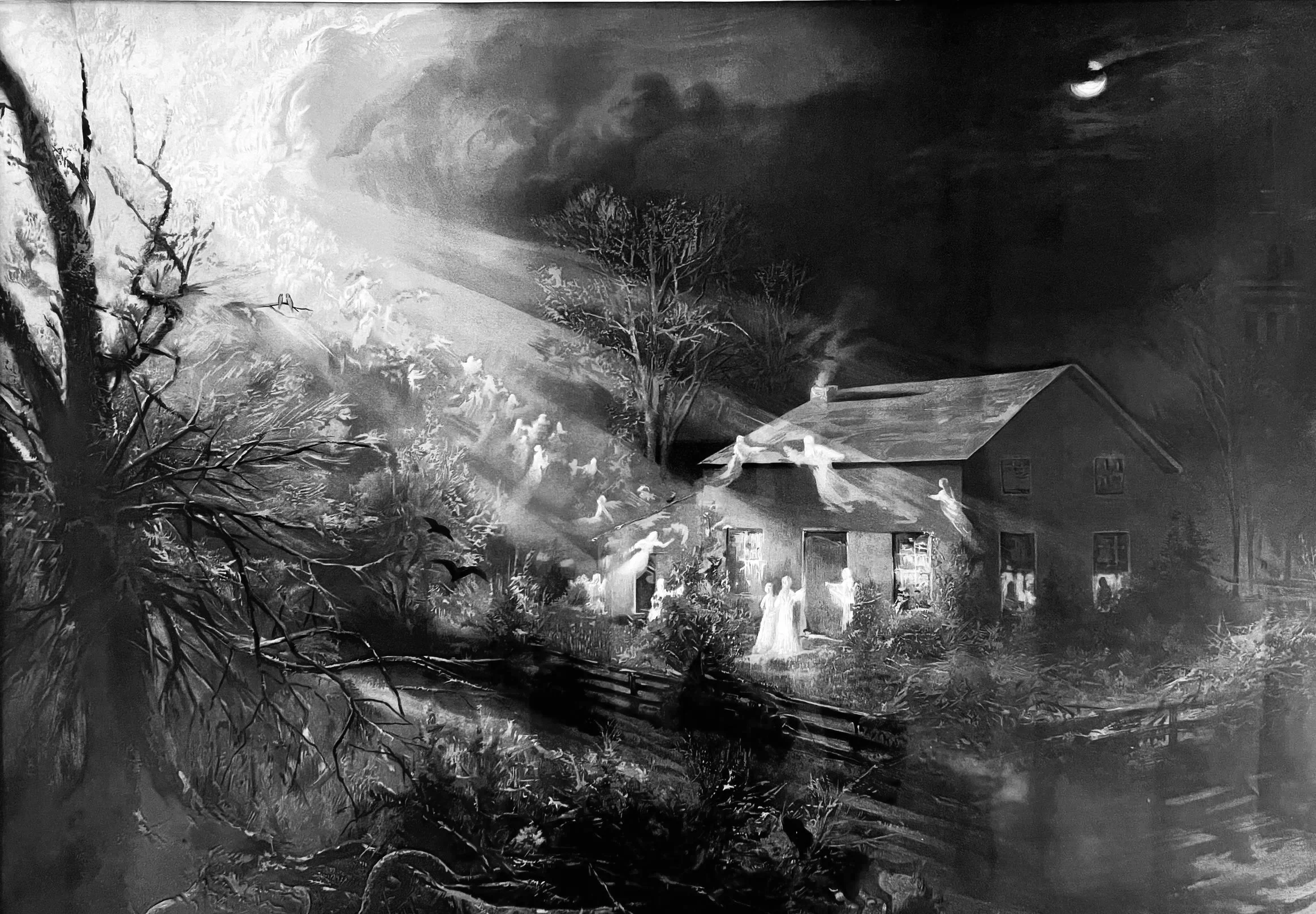
Modern Spiritualism emerged in the United States in the mid-nineteenth century during a period of intense religious experimentation and reform. In 1848, in the small village of Hydesville, New York, two young sisters, Margaret and Kate Fox, reported mysterious rappings in their home that appeared to respond intelligently to questions. The phenomenon quickly attracted attention, and demonstrations of communication with the spirit world spread rapidly across the country. What began as a curious local occurrence soon developed into a broader movement centered on the belief that human personality survives physical death and that communication between the two worlds is possible through mediums.